Memorial Gift of Money: What to Give & Why
A memorial gift of money is one of the oldest and most practical ways to show respect when someone dies. Unlike flowers that wilt or food that is eaten, money directly helps the family cover funeral costs, travel, or daily expenses during their grief. But a cash gift alone can feel temporary. Pairing it with a keepsake—something engraved with a name, date, or heartfelt message—transforms the gesture into a memory that lasts.
When to Give a Memorial Gift of Money
Cash is appropriate at any stage of loss: the funeral service itself, the wake, the memorial gathering, or weeks later when the first wave of sympathy cards has faded. Many families appreciate money after the service, because by then they understand their actual expenses. A check sent with a note often carries more weight than anonymous cash, because it shows you took time to write and mail it.
If you're attending a funeral in person, a quiet envelope or check presented directly to the family member works. If you're giving from a distance, mail it to their home or the funeral home (ask the obituary or the family which address they prefer). Include a brief, handwritten note. No long messages needed—a few honest words matter more than length.
How Much Money to Give
There is no fixed amount. A memorial gift reflects your relationship to the person who died and your financial situation. Common guidance:
- Close family or very close friend: $100–$500
- Work colleague or casual friend: $25–$100
- Distant relative or acquaintance: $15–$50
- Family or group gift: $200+
Rural and urban areas, as well as regional customs, vary. In some communities, large group gifts are more common; in others, individual gifts are standard. What matters is that you give what feels honest and manageable for you. A modest gift with a sincere note outweighs a large check with no message.
The Note That Matters
The money itself is generous. But a few words written by hand make it memorable. You don't need to rehash grief or offer advice on how the family should feel. Instead:
- State the person's name (use it; it matters).
- Say one thing you remember or appreciated about them.
- Offer practical help if appropriate ("I'm bringing a meal Tuesday" or "Call me if you need anything").
- Sign your name clearly.
Examples:
"In memory of James. His kindness made every room warmer. I'm thinking of you."
"Sarah's laugh was unforgettable. Please know you're in my thoughts. I'm here if you need anything."
"For the family of Robert. He was a good man and a loyal friend."
Keep it under ten words if you're uncertain. Brevity reads as respectful, not cold.
Pairing Money with a Lasting Keepsake
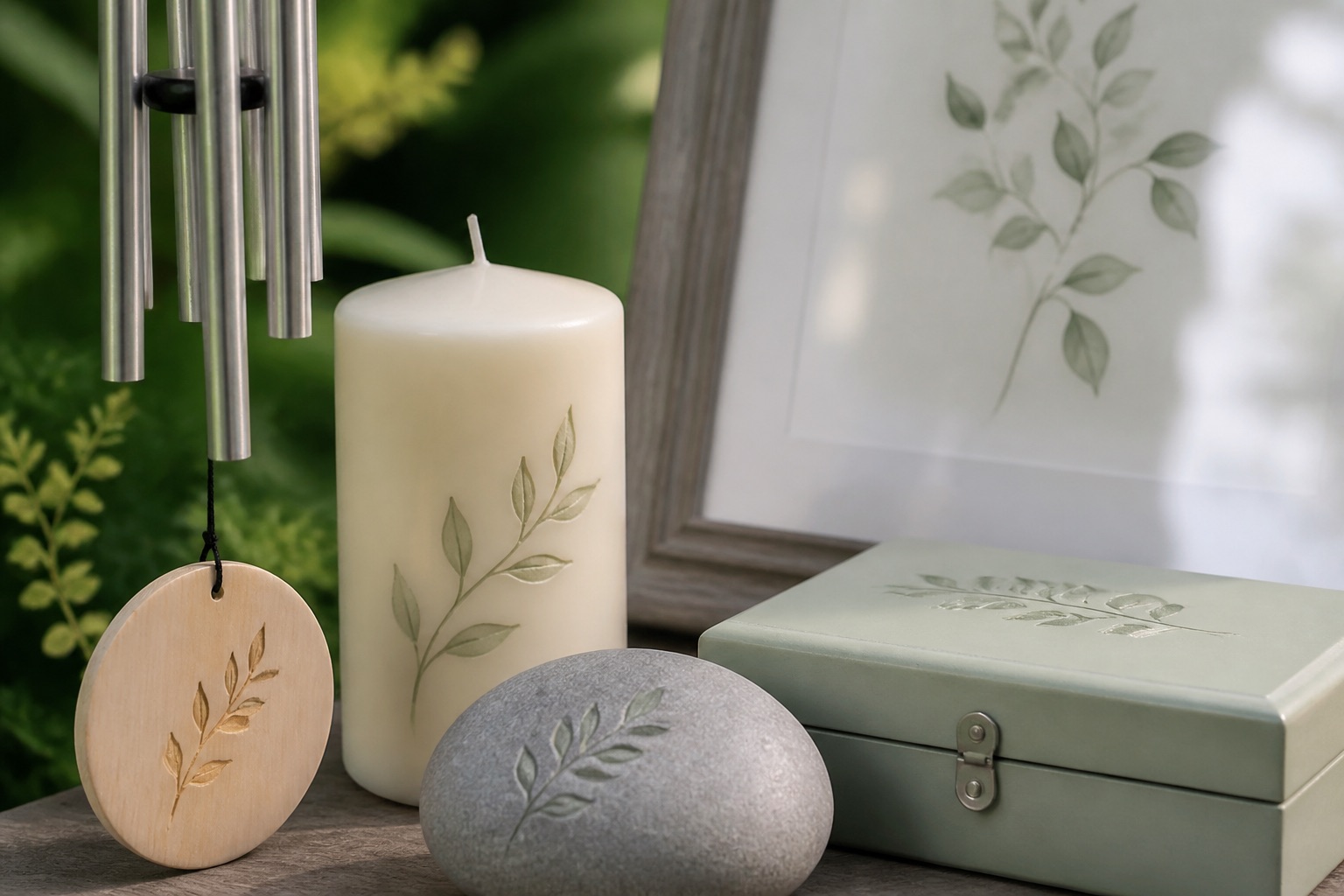
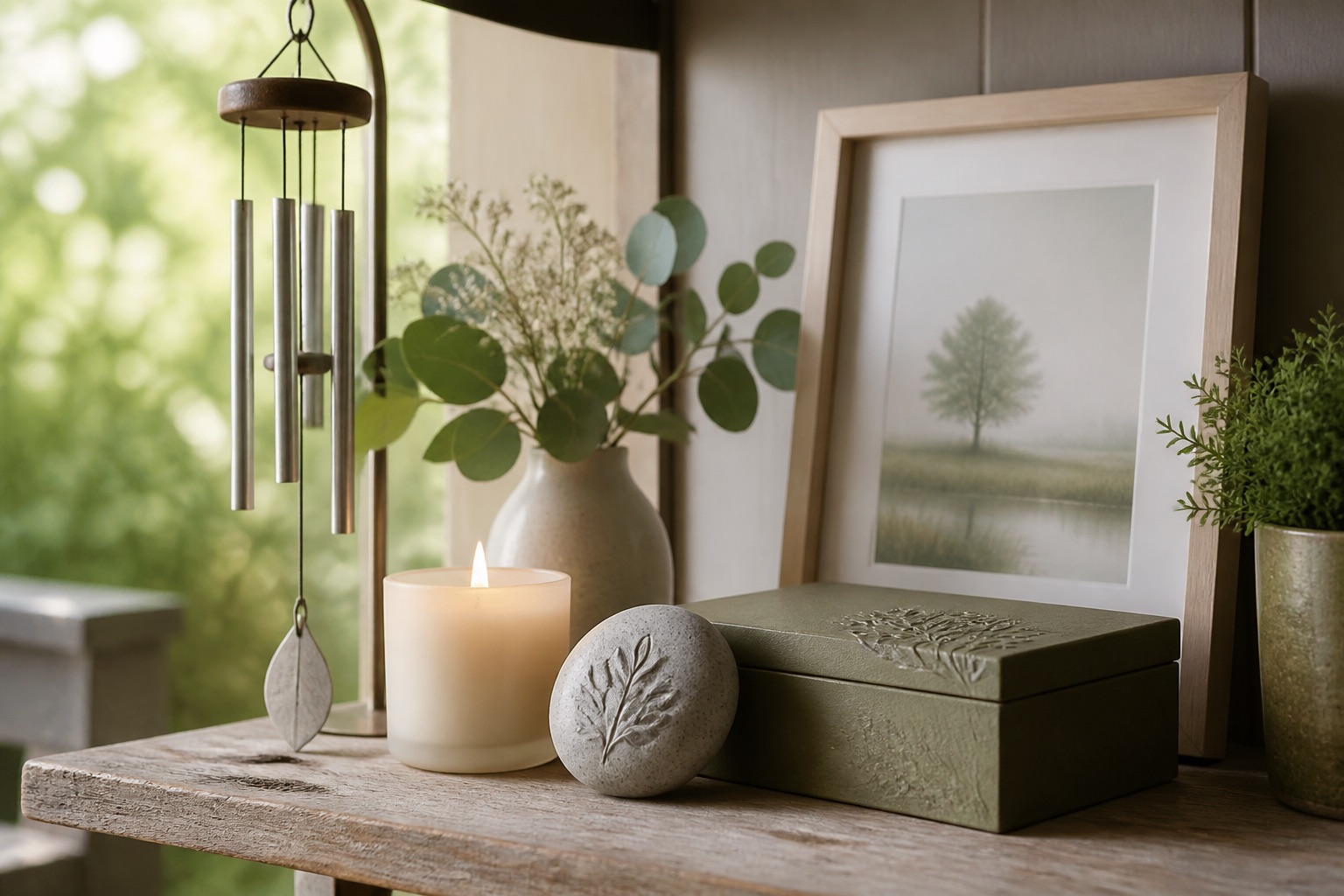
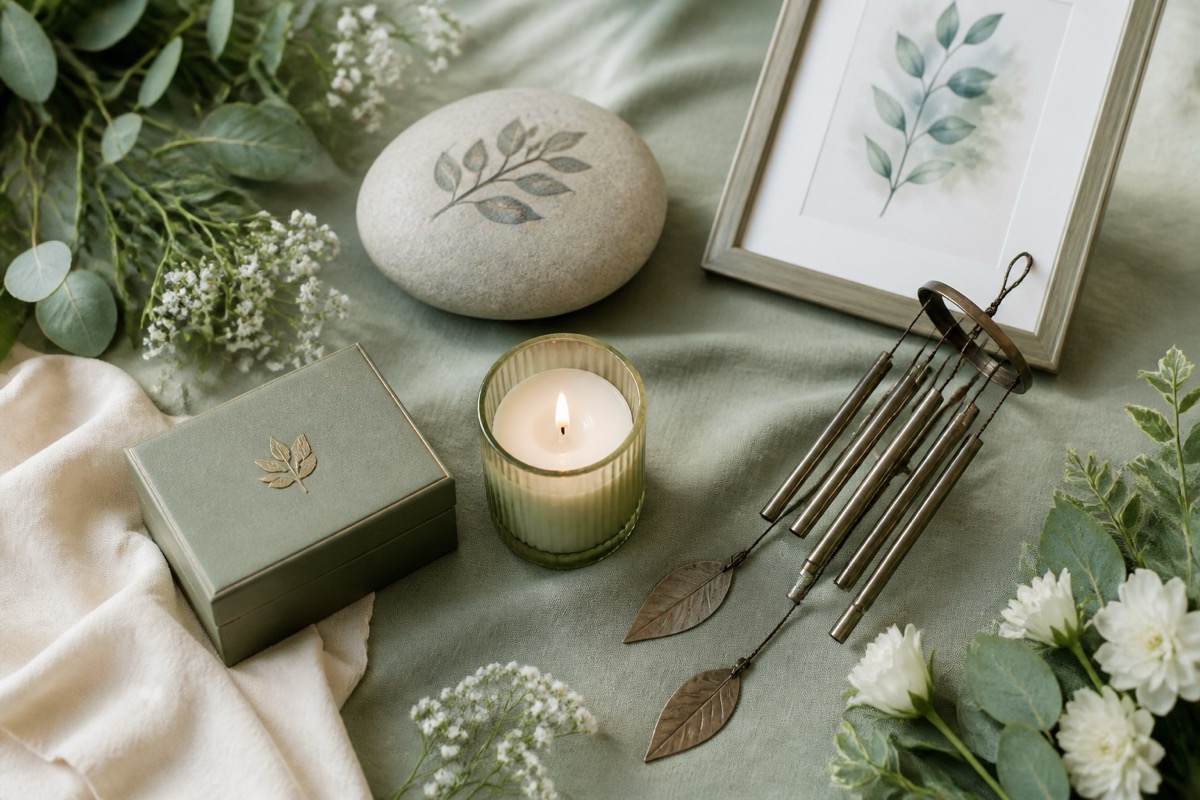
A monetary gift solves immediate needs. A keepsake solves the need to remember. When you send a check or envelope of cash, consider pairing it with a memorial gift that the family will keep on a shelf, in a garden, or on a mantle.
| Keepsake Type | Best For | Who It's For | Why It Works |
|---|---|---|---|
| Engraved memorial keepsake box | Storing mementos, letters, photos | Any age or relationship | Dignified, personal, handmade to order |
| Memorial wind chime | Garden or porch | Families who love the outdoors | Gentle reminder; natural beauty |
| Engraved memorial stone | Garden, threshold, or shelf | Long-term remembrance | Durable; can hold a name, date, or phrase |
| Memorial candle or lantern | Home altar or quiet space | Anyone grieving | Soft light; ritual or simple reflection |
| Cremation jewelry or pendant | Personal wear | Close family | Private, wearable memory |
Each of these is made to order, which means you'll see a proof before it's finalized. You choose the engraved text, verify spelling of names and dates, and ensure it's exactly right before it ships.
Regional and Cultural Customs
Money as a memorial gift is universal, but how it's given varies:
- Christian services: Cash or check in an envelope, often placed in a memorial table or given directly. No religious message required on the envelope.
- Jewish observance: Money is appropriate and often preferred (flowers are less common in traditional Jewish funerals). Gifts of remembrance jewelry or stones fit naturally with the practice of gathering at gravesites.
- Asian customs: Red envelopes are not used for memorial gifts (red envelopes are for auspicious occasions). White, black, or silver envelopes are respectful.
- Muslim traditions: Money is appropriate and helps the family. Keep any note brief and non-religious unless you share faith with the family.
- Southern US: Covered dish or food is common alongside cash. Never either-or.
- UK and EU: Cash is less common than in the US; a check or bank transfer is more usual. Memorial stones and keepsake candles are popular keepsakes.
When in doubt, ask. "What is most helpful for your family right now?" is always acceptable.
What to Check Before You Order a Keepsake to Pair with Money
If you decide to send both a monetary gift and a physical keepsake, take a moment to verify a few details:
- Spelling of the name: Middle initials, preferred nicknames, or unusual spellings matter. Ask the family or the obituary to be sure.
- Dates: Birth and death dates, or just the year? Check before you order.
- Size and material: Will a memorial wind chime suit their home? Is a garden stone appropriate for their space, or is an indoor keepsake better?
- Personalization text: Beyond the name and date, what message or phrase feels right? Initials, a short quote, or "Beloved Father"?
- Timing: Made-to-order keepsakes take 2–5 business days to produce, plus 2–5 business days for US delivery (5–10 for UK/EU). If the service is in two weeks, you have time; if it's in four days, you may need to order immediately.
- Proof review: Before your keepsake is engraved, Keepsake Grove will show you a proof. Check the spelling and placement, and approve it before production starts.
A Last Word on Giving
Money doesn't replace presence, but it is one honest way to say I see your loss and I'm helping. Add a handwritten note, and it becomes a conversation. Pair it with a keepsake from Keepsake Grove, and it becomes a memory that stays. The family won't remember the amount as much as the fact that you showed up—in person, by mail, or both.
If you're uncertain about any detail—what to engrave, how much to give, where to send it—call the funeral home or ask the family directly. Straightforward questions are always welcome when someone has died.
---
Frequently asked questions
Is it rude to give money at a memorial service?
No. Money is one of the most practical and respectful gifts, especially in modern times. It helps families with expenses and shows tangible support. Include a brief handwritten note to make it personal.
Can I send money after the funeral?
Yes. Families often appreciate money weeks or months later, when the immediate rush has passed and they understand their actual costs. A check or transfer with a note is welcome at any time.
Should I put money in a card or an envelope?
Either works. A plain white or neutral envelope is standard at services. A card with a brief message is fine for money sent by mail. Avoid bright colors or casual designs.
What if I don't know how much to give?
Give what feels honest and manageable for your budget. A modest gift with sincerity outweighs a large gift given with reluctance. Any amount shows respect.
Can I give money as a group gift?
Yes. Workplaces, friend groups, and families often pool money. One check or one envelope from the group is fine. Include a card listing the names of those who contributed.
What should I write on a memorial gift note?
Use the person's name, mention one memory or quality, keep it brief (under ten words is fine). Example: "In memory of David. His warmth will stay with us." No need to explain grief or offer advice.
Is a keepsake necessary if I'm giving money?
No. Money alone is complete and appropriate. A keepsake simply extends the gesture into something the family can hold or display over time. Both together are thoughtful but not required.
How do I personalize a memorial keepsake?
When you order from Keepsake Grove, you'll choose the text to be engraved—names, dates, a short phrase, or initials. You'll see a proof before production, so you can verify spelling and placement.
How long does it take to order a keepsake to send with money?
Made-to-order keepsakes take 2–5 business days to produce, plus 2–5 business days for US delivery (5–10 for UK/EU). If you need something quickly, order as soon as you decide. See shipping details.
Can I give money if I'm grieving too?
Yes. You don't need to be unaffected or distant to give. "In memory of Sarah. She meant so much to all of us" is honest and allowed.